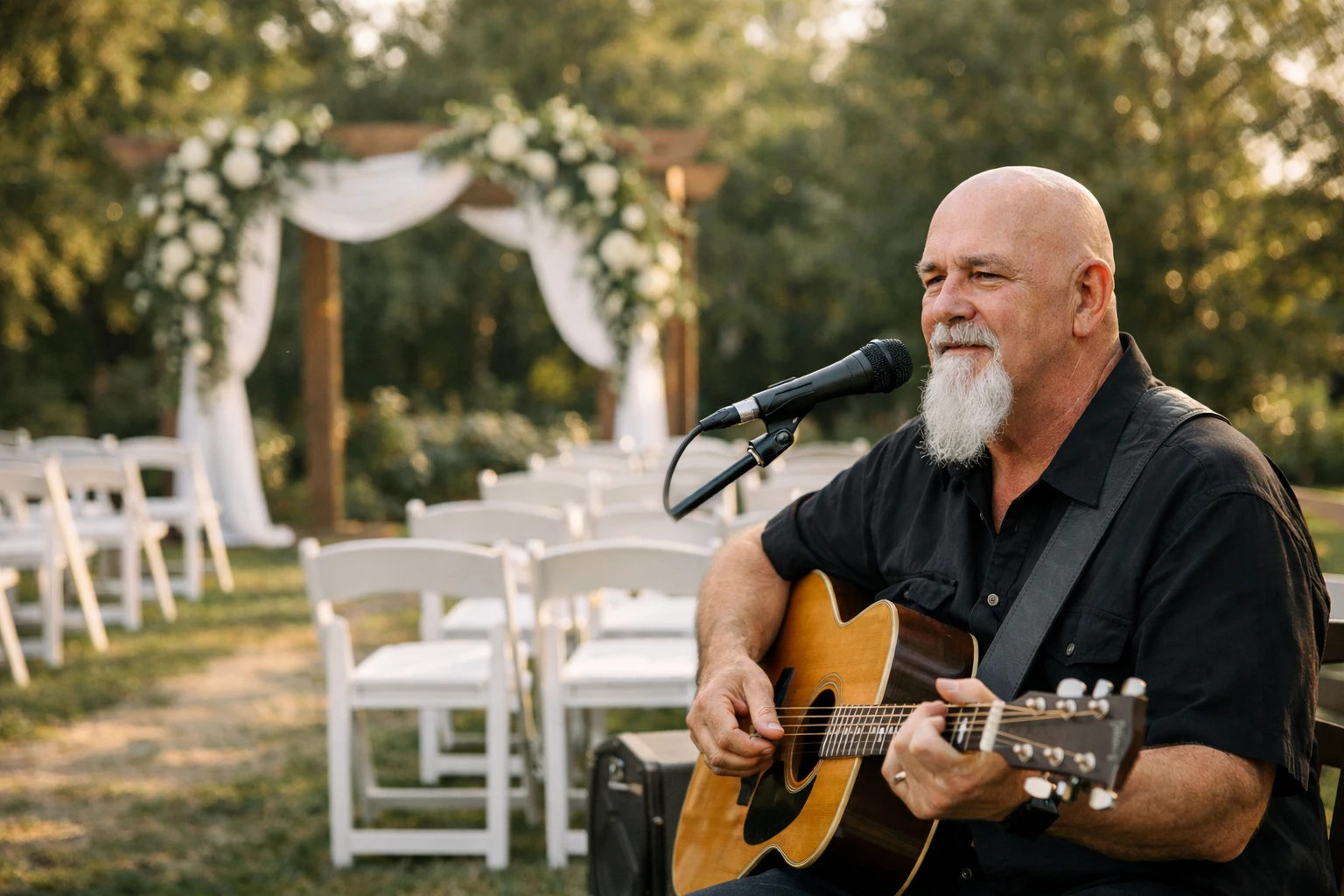
Live Acoustic Singer & Guitarist / Watch Full Performances Before You Book
Most solo acoustic wedding musicians are guitarists who sing. There's nothing wrong with that—until you need a vocalist who can deliver emotional impact on every song.
I'm a vocalist first. The guitar supports what my voice does. That distinction matters for weddings because the emotional weight of your ceremony or the energy of your cocktail hour depends on a voice that can sustain notes, hit the right dynamics, and make your chosen songs feel personal instead of performed.
A strong male voice has particular value at weddings. I can sing songs in their original keys, including songs recorded by female artists. That means your favorite song—whether it's originally performed by a woman, a man, or anyone else—sounds like it's meant to be sung, not approximated.
Couples often assume that a solo acoustic performer means thin sound or limited repertoire. You're hiring one person, so you get what one person can deliver in real time. That's it.
I perform completely live. No backing tracks. No playback. What you hear is happening in the moment—adjustments, arrangements, emotional decisions, all unfolding as your wedding unfolds. If a guest is crying during the processional, I feel that and shape the song accordingly. If the cocktail hour needs energy to keep conversation flowing, my arrangement and pacing shift in response.
The sound is full because I arrange every song to sit well as a solo performance. Certain songs work beautifully with just voice and guitar. Others benefit from specific arrangements that create depth without needing a band. I know which songs belong in your ceremony, which fit the cocktail hour, and which work for dancing later.
Most solo performers are limited by their vocal range. If a song doesn't sit naturally in their voice, they either avoid it or transpose it down, which changes how the song feels.
My vocal range means I can perform most songs in their original key. That's not just about hitting the notes—it's about the emotional content staying intact. When you hear a song in the key it was written in, performed by someone who understands what that key means for the melody and the feeling, everything lands differently.
For weddings, this translates to more options. Your favorite ceremony song. Your parents' favorite. That song that means something specific to both of you. I can likely sing it the way it was meant to be sung, not modified or transposed to fit a limitation.
Every wedding follows a timeline, and every timeline changes. Guests arrive early. The ceremony runs long. The cocktail hour moves faster than planned. Timelines shift because weddings are full of human moments, and human moments don't always fit the schedule.
I adjust throughout the day. Volume changes depending on the room and how many people are present. Pacing shifts based on what I see happening with your guests. If the ceremony needs to feel more intimate, the energy pulls back. If the reception needs to build toward dancing, arrangements and song selection evolve in response.
That's only possible because I'm performing live and reading the room continuously. Backing tracks can't do that. They lock you into a plan. Live music adapts to your actual day.
Ceremony: The song matters. The delivery matters more. Whether you're walking down the aisle to a well-known piece or something deeply personal, my focus is on the emotional quality of the performance—on making sure your moment feels significant and intentional.
Cocktail Hour: Background music that doesn't disappear into the walls. I play songs that encourage conversation instead of demanding attention. The sound is present and intentional, but the room stays focused on your guests connecting with each other.
Reception: Dinner music that complements the meal and conversation. Then, as the evening shifts, arrangements and song selection change with it. I can read when energy should build, when to stay seated and intimate, and when to become more of a focal point if you want dancing and celebration to take shape.
Your planner needs to know when I'm arriving, where I'm setting up, what sound I need, and how flexible I am with timing changes. Your photographer needs to understand that I'm not in the way during ceremony photos and that I'm positioned well for the moments they want to capture. Your venue needs sound levels that work for the space and the timeline.
I arrive early. I manage my own sound. I dress appropriately for your event's tone. I coordinate with your timeline and adjust when it shifts. I don't need sound support from the venue unless you want it. I make myself easy to work with because your wedding shouldn't include stress about whether the musician is handling their part.
When things change—and they always do—I adapt. A delayed ceremony. A guest who needs an extra song. A timeline that shifted by thirty minutes. These are normal parts of weddings, and they're handled as part of the performance, not as problems.
Backing tracks provide reliability. You know what you're getting. Same arrangement every time. Same tempo. Same everything.
Live performance provides presence. When you stand up to dance your first dance, a live musician feels that moment and adjusts the emotion to fit what's happening. When guests are laughing and talking during cocktail hour, the background music supports that conversation instead of fighting it for attention. When your father has an unexpected emotional moment during the father-daughter dance, a live performer responds to that and creates the right space for it.
A good live musician isn't just playing songs—they're supporting the emotional truth of your day. That can't be recorded ahead of time. It only happens when someone is present, listening, and making real-time decisions about how to serve your wedding.
You're hiring a voice and a presence for one of your most important days. It makes sense to hear full performances, not quick clips or promotional videos. Listen to how I sustain notes. Notice my arrangements. Pay attention to emotional delivery. Decide whether my interpretation of your favorite songs aligns with what you're imagining for your wedding.
Watch ceremony performances. Listen to cocktail hour sets. See how I approach different genres and song types. That will give you a real sense of whether I'm the right musician for your specific day.