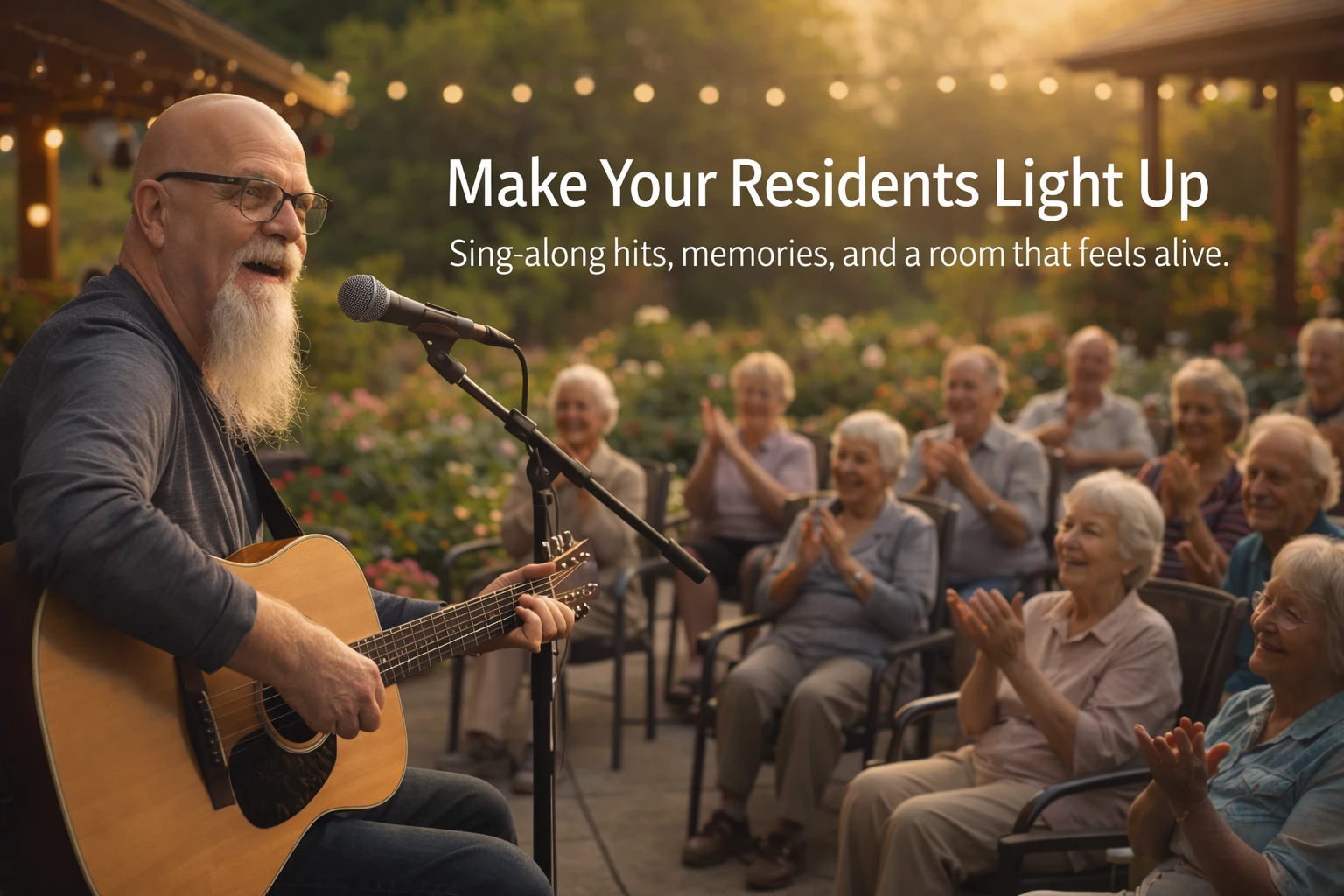
Senior communities thrive when residents have moments to connect—with each other, with memory, with life beyond their rooms. Live music creates those moments differently than almost anything else. It draws people from their rooms. It starts conversations. It reminds people of time and places and feelings they've carried with them for decades.
I perform specifically for senior communities and care facilities throughout North Georgia. Not as background entertainment. As the reason people gather. As something worth being part of.
A live performer in a senior community is different than recorded music or a prerecorded show. I'm there. People can see me respond to them. They can ask for a song. They can tell me why a particular piece matters to them. That interaction—that presence—is what makes live performance matter for seniors.
I don't perform contemporary pop or trendy songs at senior communities. I focus on music people have lived with—standards, folk songs, classics from every generation, pieces that carry meaning because they connect to real life.
This isn't nostalgia for its own sake. It's recognition that great songs remain great for a reason. A song that mattered in someone's life fifty years ago still means something when performed live with quality and respect. The melody. The lyrics. The memory of when that song mattered. All of that comes back.
I also understand that senior audiences include people across multiple generations. Someone in their sixties has a different musical landscape than someone in their nineties. My repertoire spans enough territory to speak to people across that range—not everything for everyone, but enough range that most people find songs that resonate.
Live performance at a senior community isn't the same as live performance at a wedding or corporate event. The energy is different. The attention span is different. The goal is different.
I adjust everything—pacing, volume, song length, between-song conversation—to the room and the people in it. If I see someone getting tired, I adjust. If a particular song is drawing people in deeply, I don't rush past it. If someone wants to talk about a song or a memory, I create space for that.
This is performing for the people in the room, not at them. It's about whether residents and visitors are experiencing something that matters, not whether I'm executing a predetermined setlist.
Senior communities plan events—holiday celebrations, birthdays, community gatherings, visits from family. Live music transforms these from structured time into actual experiences that people remember and want to repeat.
I've performed at holiday parties where residents who don't usually participate came to listen and watch. I've been part of birthday celebrations where the music mattered as much as the cake. I've played at community events where families visiting for the day got to experience their relative in a different light—connected to other residents, engaged, present.
That's the goal: not just providing entertainment, but creating moments that make community life feel intentional and connected instead of routine.
Senior communities have specific acoustic and logistical needs. Sound needs to be clear without being overwhelming. I can perform with minimal technical support or integrate with your facility's existing sound system. I dress appropriately and adjust presentation for the setting. I'm flexible with timing and able to adapt if a resident needs extra attention or if the event pace needs to shift.
I also understand that senior communities include people with varying mobility, hearing ability, attention capacity, and comfort with new people. My performance accommodates that diversity—it's clear enough for people with hearing challenges, engaging without being demanding, physical presence without being intrusive.
Activity directors, healthcare staff, and community leadership need to know I'll make their jobs easier, not create logistics problems. Arrival and setup are straightforward. I manage my own sound and adjustments. I coordinate with your timeline. I'm professional and respectful of the space and the people.
Recorded music plays whether people listen or not. Live performance creates attention. Someone is there. They're responding. That changes everything.
Residents who typically stay in their rooms come to listen. People who don't usually connect with others gather together. Family members visiting see their relative engaged and present. Staff notices the shift in community atmosphere after live music events—people talking more, engaging differently with each other, remembering things from their lives.
That's the difference between having music available and having a live musician present. One is content. The other is connection.
When you perform a song that someone knows—a song that's part of their life history—the performance matters more. A mediocre version of a meaningful song can feel disappointing. A really well-performed version can bring that song back to life in a new way.
I take that seriously. The standards I perform have been performed ten thousand times. That doesn't mean they're easy to perform well. It means they require care, vocal control, emotional respect, and the kind of arrangement skill that makes a familiar song sound fresh without betraying why people loved it in the first place.
Seniors have spent decades listening to great music and great performances. They can tell the difference. Performing for them requires treating their musical knowledge and memory with respect.