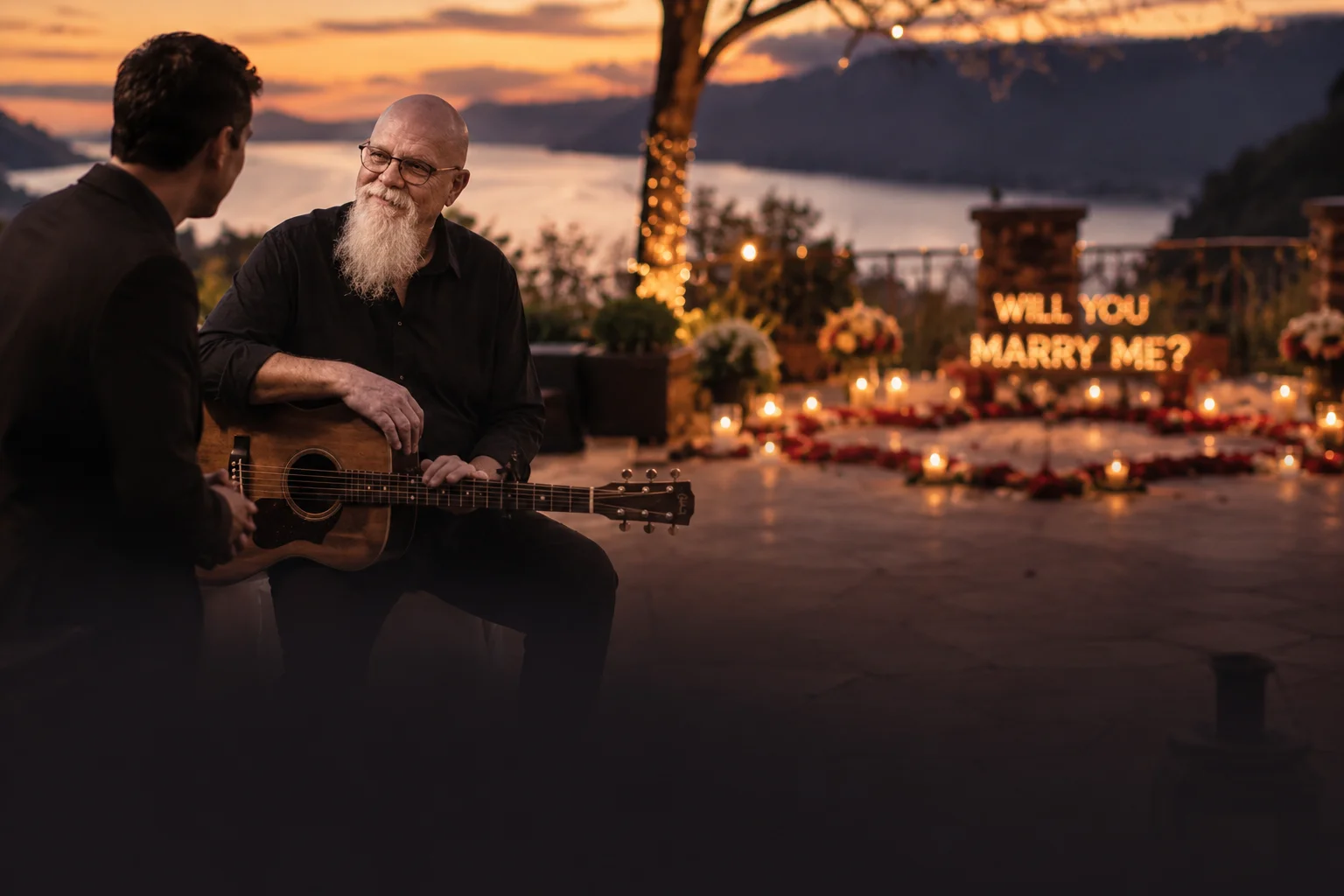
Watch a real proposal performance above
Your proposal deserves live music that honors the moment's significance. Live acoustic music creates genuine presence that transforms any proposal into something she'll remember forever. The emotional impact is unmistakable.
When live music starts during your proposal—real guitar, real voice, real presence—she immediately knows this moment is special. The authentic presence of a musician says you've invested in making this proposal genuinely unforgettable.
The difference between pre-recorded background music and a real musician performing live during your proposal is profound. You get presence, responsiveness, and authenticity—elements that honor what this proposal means to you both.
Proposals require precise coordination. I work directly with you to understand your specific plan—the location, the timing, the atmosphere you want to create. Everything is handled with complete professionalism and discretion.
Battery-powered setup means I can perform anywhere for your proposal—indoors, outdoors, any venue type. The coordination ensures your proposal moment flows flawlessly, with the music becoming part of the magic rather than a complication.
You focus on the proposal. I handle the music. Everything coordinates perfectly for a proposal she'll never forget.
We'll talk through your proposal—where, when, what atmosphere you want to create. What songs matter most to you? How should the music enhance your proposal? What timing works best?
I'll coordinate with you and your venue on all logistics—positioning, timing, how the music integrates seamlessly into your proposal plan. Everything is coordinated so your proposal music adds to the moment's authenticity.
For comprehensive proposal planning guidance, see marriage proposal music options and coordination.
Your proposal deserves live music that matches its significance. A trained musician brings professionalism and emotional depth that pre-recorded tracks cannot deliver. It honors what this proposal means to her and everyone witnessing it.
When she experiences live music during your proposal—real guitar, real voice, real presence—the moment becomes genuinely extraordinary. Years later, she'll remember how authentic it felt, how much thought went into every detail, how the live music made the proposal special.
See what live proposal music looks and sounds like in real moments. The video catalog has performances filmed during actual proposals. You'll hear the authenticity, feel the emotional impact, understand what a real musician brings to a proposal.
That's what your proposal will experience—a professional musician with experience in proposal moments, completely focused on making your proposal perfect with live music support.
Ready to add live music to your proposal?
Explore Marriage Proposal Music